Product HLS-HWE1000 Overview Technical Specifications Architecture Models Secure SSD — Coming Soon Solutions Defense & Military Government Critical Infrastructure Enterprise Company About HLS Partners Tech News Partner Login Contact

HLS-HWE1000
Hardware Encryptor

Next-gen portable security. Bridging remote sites securely through encrypted tunnels — hardware-level protection for critical data flows.

Request a Demo View Specifications
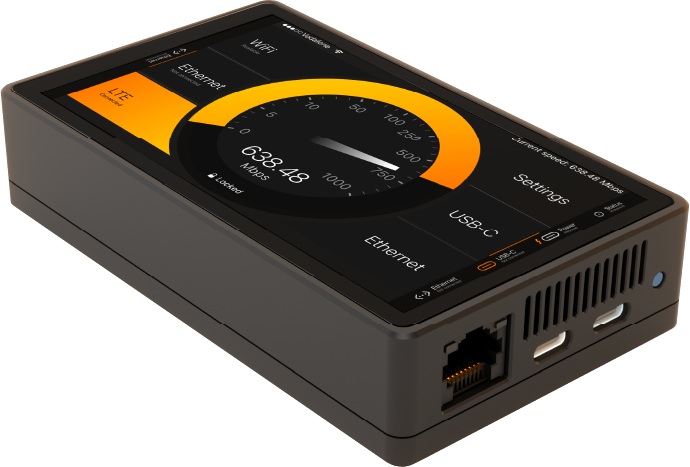
HLS-HWE1000 Hardware Encryptor — OLED display showing 638 Mbps active throughput

OLED display showing 638 Mbps active throughput · Gigabit Ethernet · USB-C power
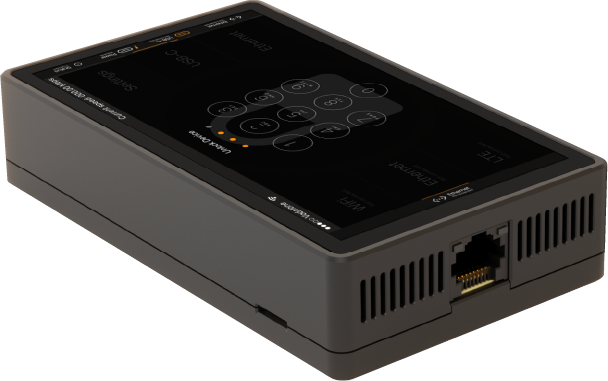
HLS-HWE1000 — side view

127.5 mm × 74.5 mm × 27.3 mm · ~350g

EncryptionAES-256 GCM
ThroughputUp to 1 Gbps
Tunnels512 (up to 1024)
Weight~350 g
ConnectivityRJ45 · Wi-Fi 6 · LTE

Nothing Gets In

GCM packet-level authentication. Unauthenticated traffic dropped instantly at the hardware level.

Nothing Gets Out

All outbound traffic encrypted before reaching the Internet — no exceptions, no bypass possible.

Tamper = Zero

Physical intrusion triggers instant, irrecoverable key erasure. The device self-destructs its secrets.

Military-Grade Security.
Pocket-Sized Form Factor.

FPGA + AES-256 GCM

Dedicated FPGA-based encryption engine with AES-256 GCM and True Random Number Generator (TRNG).

Extreme Tamper-Proofing

Independent tamper-proof circuits automatically erase all keys the moment physical intrusion is detected.

Multiple Connectivity

RJ45 Gigabit, Wi-Fi 6 (802.11ax), and LTE CAT4 — works on any network type, anywhere.

Up to 1 Gbps Throughput

Full gigabit encryption speed despite the compact ~350g form factor. No performance trade-off.

Customizable Keys

Encryption keys generated on-demand by the embedded TRNG (NIST SP800-90B compliant). Never reused.

Easy Configuration

OLED touch display and web GUI designed for non-technical users. Deployable without IT specialists.

Emergency Wipe

Instant secure erasure on command — all keys and sensitive data irrecoverably destroyed in seconds.

Power Versatility

Powered from phones, laptops, power banks, or standard supply via USB-C. Works in any field condition.

HLS-HWE1000 Full Specs

⚙️ Core Architecture
ProcessorNXP i.MX8M PLUS Quad-core Cortex-A53
Encryption EngineFPGA-based real-time hardware accelerator
Operating SystemProprietary Hardened OS
Tamper ProtectionHardware detection with secure key erasure
📐 Hardware Design
DisplayOLED 1280 × 720, Capacitive Multi-Touch
Dimensions127.5 mm × 74.5 mm × 27.3 mm
Weight~350 g
Operating Temperature-20°C to +60°C
Power InputUSB-C 9V/2.5A or 15V/1.5A (Max 30W)
🔐 Cryptographic Features
Encryption AlgorithmAES-256 GCM
Zero Trust ModelSelf key management — NO cloud dependency
Key StorageSecure, hardware-isolated
TRNG ModuleNIST SP800-90B compliant
📡 Networking
Ethernet10/100/1000 Mbps RJ45 (×2)
Wi-Fi802.11 a/b/g/n/ac/ax dual-band
CellularLTE CAT 4 — up to 150 Mbps DL
USB-CConnectivity (×1) and Power (×2)
🚀 Performance
ThroughputUp to 1 Gbps
Secure Tunnels512 standard (up to 1024 custom)
🛠️ Management
Management InterfaceWeb GUI
Remote ManagementWeb GUI through encrypted tunnel
Deployment ModesStandalone, LAN bridge, tunnel endpoint
OS CompatibilityWindows, Linux, macOS, iOS, Android, Harmony OS, IoT, SCADA

Built for Zero Compromise Security

Three deployment models covering every real-world secure networking scenario.

Model 1

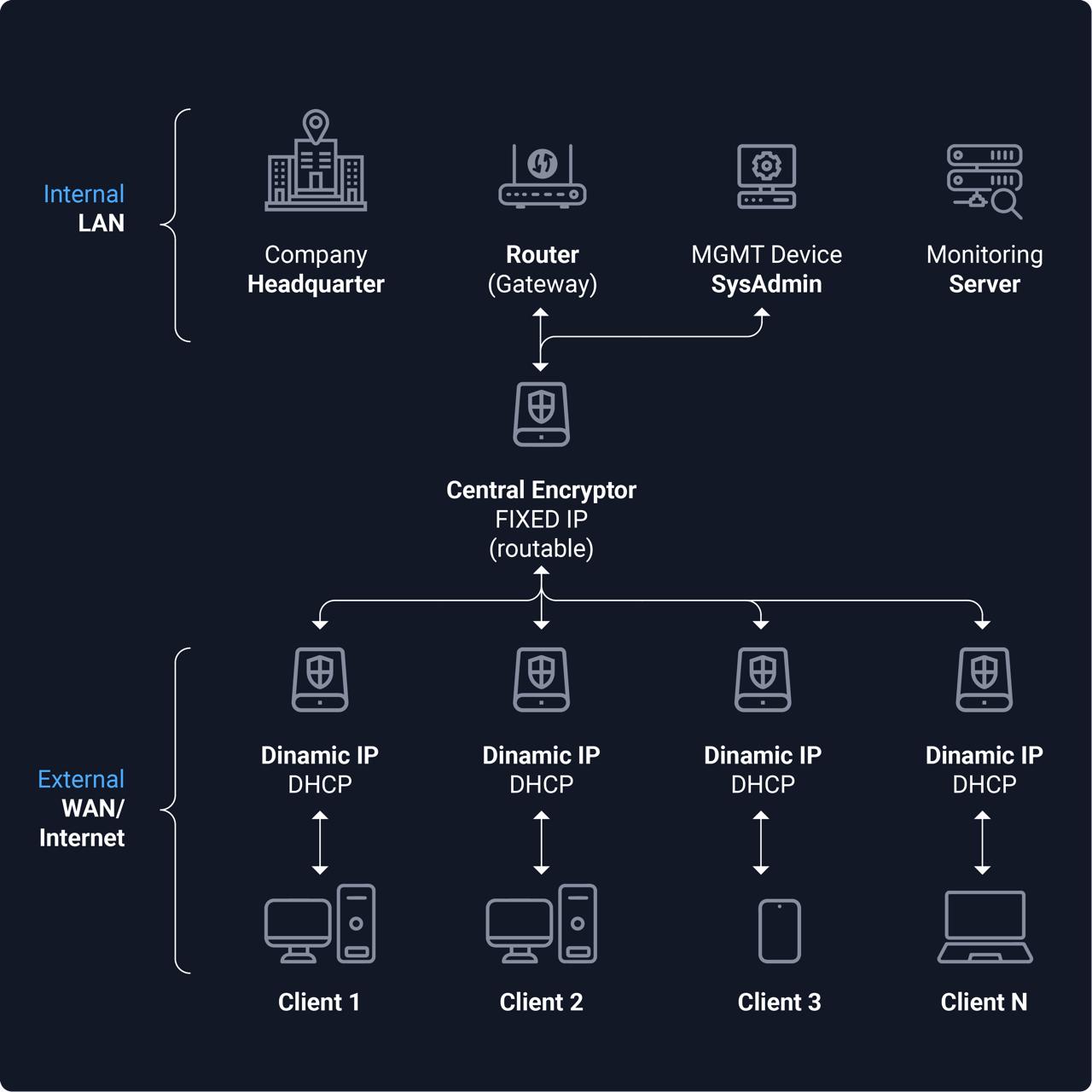
Secure Hub & Spoke Architecture

Protecting Home Users, Mobile or Traveling Users

Secures individuals working outside the office — executives, field engineers, remote employees. The HLS-HWE1000 travels with the user, creating an encrypted tunnel from any network (hotel Wi-Fi, mobile data, wired) to the corporate environment.

Typical users:

  • Remote workers connecting from unsecured networks
  • Military or field personnel in the field
  • Consultants handling confidential information
  • Executives traveling internationally
Fig.1 — Hub and Spoke Architecture Diagram
Model 2

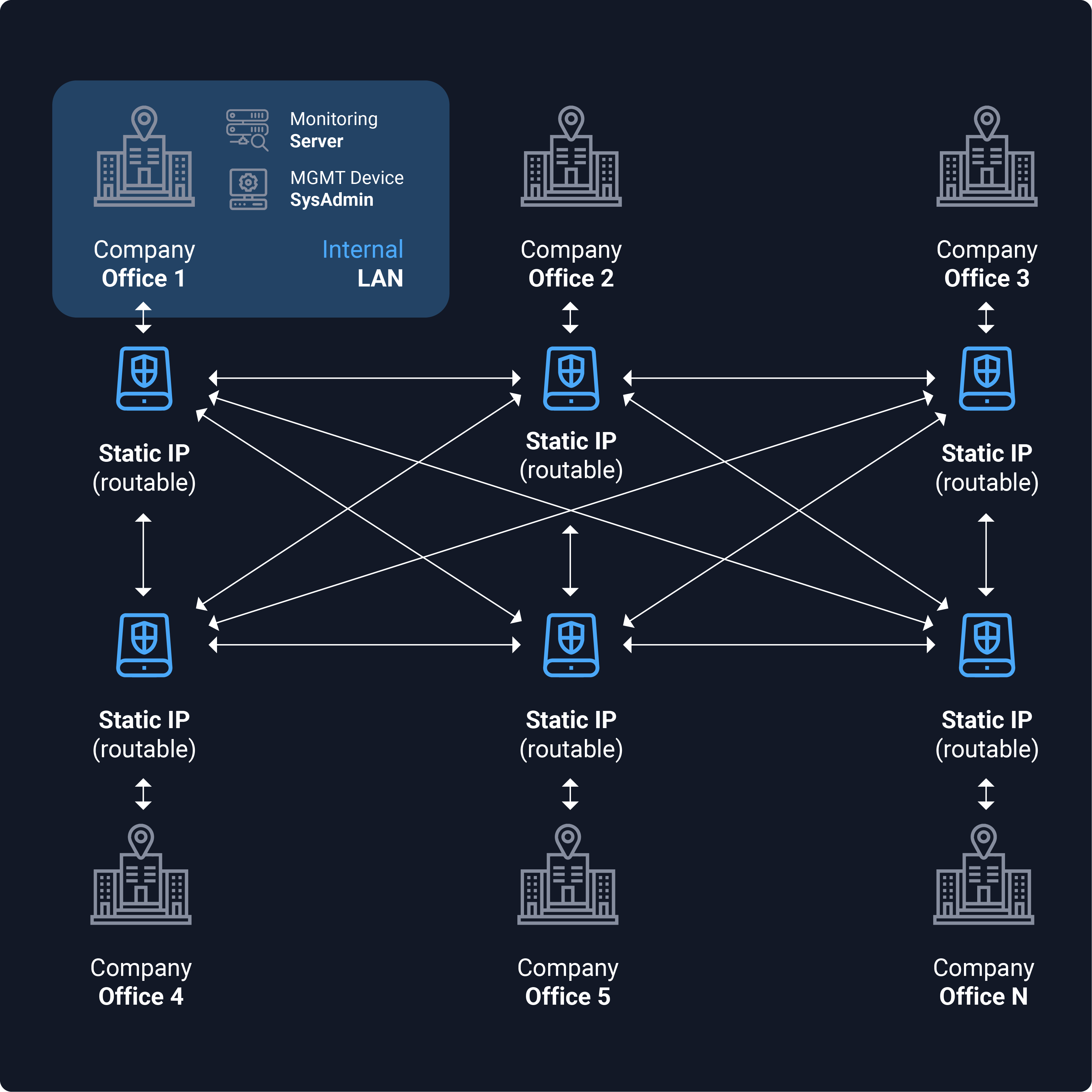
Secure Site-to-Site Architecture

Connecting Two or More Offices or Locations

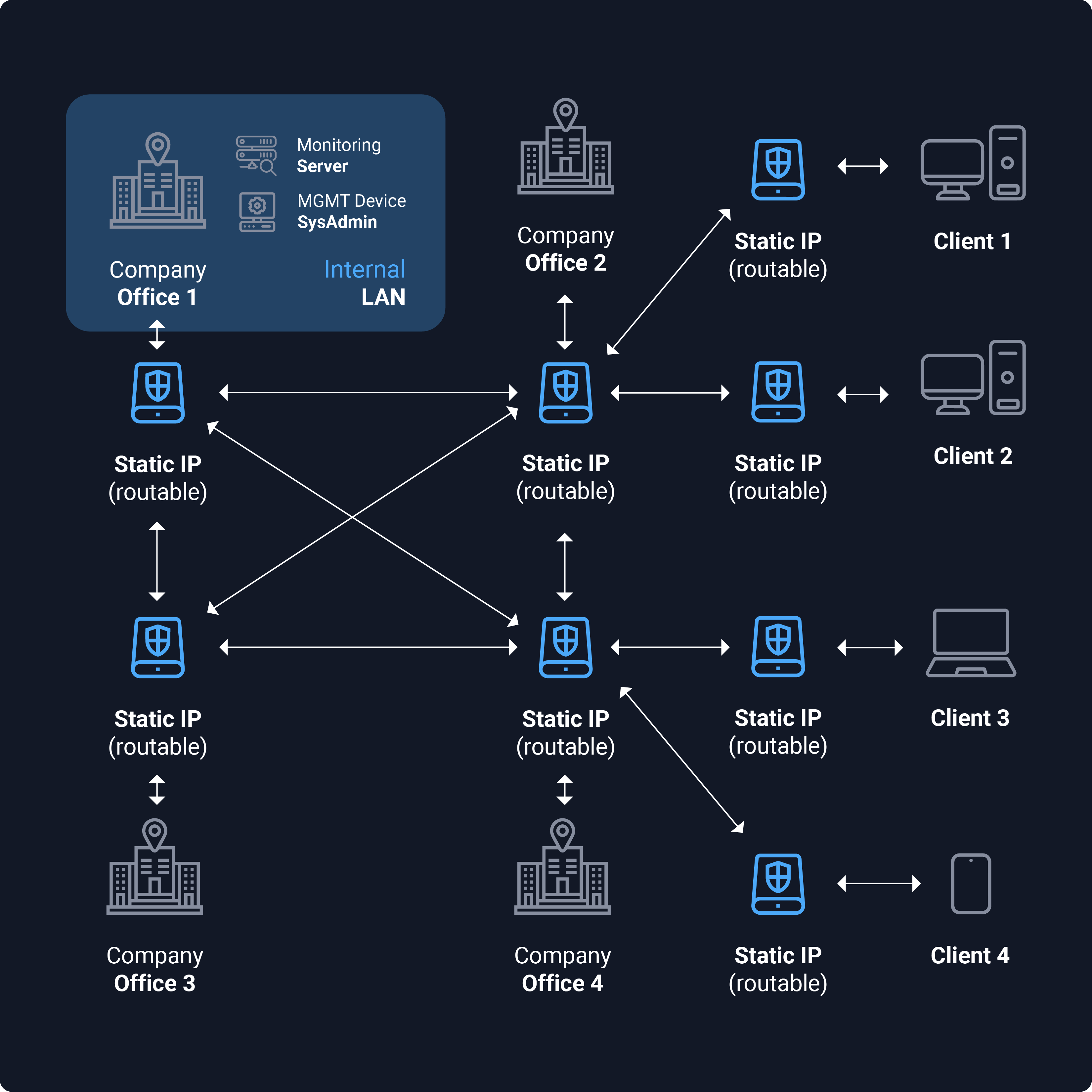
Each physical location installs one HLS-HWE1000 at its network entry point. The devices automatically create private encrypted tunnels between sites — all data traveling between locations is encrypted before leaving and decrypted only at the destination.

Typical users:

  • Companies with multiple offices or branches
  • Government agencies with regional offices
  • Industrial facilities connecting remote plants or warehouses
Fig.2 — Mesh Architecture Diagram
Model 3

Hybrid / Mixed Secure Architecture

Combination of Full-Mesh and Hub-and-Spoke

Combines direct site-to-site links (full-mesh) with a central hub serving mobile and remote users (hub-and-spoke). Major offices communicate directly; a headquarters or data center simultaneously provides secure access for field teams or temporary locations.

Typical users:

  • Large enterprises with regional branches and mobile teams
  • Government or defense with command centers and field units
  • Critical infrastructure with control centers and distributed equipment
  • Hybrid work environments (office + remote staff)
Fig.3 — Mixed Architecture Diagram

Common Advantages Across All Models

Automatic Encryption
Data is protected without users needing technical expertise — it just works.
Hardware-Level Security
Dedicated FPGA provides stronger protection than any software solution alone.
Portability
127.5mm × 74.5mm × 27.3mm. Fits in a pocket, travels with the user.
Independence from Cloud Services
No external servers required. Zero third-party risk or dependency.
Tamper Protection
Physical intrusion triggers automatic, irreversible key deletion. Nothing is recoverable.

Ready to evaluate the hardware?

Contact our team to arrange a demonstration, request a technical datasheet, or discuss custom configuration for your deployment scenario.
Request a Demo Contact Sales